Income and socioeconomic status
It is well known that low socioeconomic status negatively affects mental health (Kim & Cho, 2020).
Economic hardship is linked to health inequalities, with unemployment and lower household income being significant social determinants of mental health (Alegría, NeMoyer, Falgas, Wang, & Alvarez, 2018) (Salami et al., 2017). Risk factors for common mental disorders (e.g., depression and anxiety) are also strongly associated with social inequities (WHO, 2014) (Alegría, NeMoyer, Falgas, Wang, & Alvarez, 2018).
Subpopulations of immigrants and refugees come to Canada with vast differences in financial resources and can experience vastly different financial conditions once settled. Although new immigrants are one of the groups most likely to experience poverty, there are, of course, differences within and between groups (Picot & Lu, 2017). Income can also be influenced by immigrant class.
-
Economic class
Generally, applicants in the economic class come to Canada with capital. Obtaining employment in Canada is often not simple and can threaten the financial security of these individuals and their dependents. Immigrants may face financial hardship due to an inability to earn wages appropriate to their education and skills (this is discussed in greater detail in the next section).
Family class
To sponsor family members, a sponsor must demonstrate a level of income that meets the minimum necessary income or low-income cut-off (LICO) for a given family size, as established by Statistics Canada. The sponsor is freed from this requirement if either:
- The individual requiring sponsorship is the spouse, common-law partner or conjugal partner of the Canadian sponsor.
- The individual requiring sponsorship is the dependent child of the Canadian sponsor.
Government sponsored refugees (GARs)
Government sponsored refugees (GARs) are eligible to receive funding from the Government of Canada for up to one year, or, at times, until they are able to support themselves. The amount is approximately equivalent to that provided by provincial social assistance programs.
Privately sponsored refugees (PSRs)
Those privately sponsoring refugees are expected to provide them with financial support for up to one year. The amount is at least equal to the average rates for social assistance.
Some facts
-
The differences associated with the channel of immigration and income are reflected in subpopulations of immigrants and refugees.
-

Recent immigrants who are employed tend to earn less than the Canadian-born population, with principal applicants in the economic class earning the highest wages. (Statistics Canada, 2017l)
-

Women are more likely than men to be admitted under the Family Class category. (Immigration, Refugees and Citizenship, 2018)
-
In 2013, 54.1% of female permanent residents were admitted under the economic class (19.7% as principal applicants and 34.4% as the spouse or dependent of a principal applicant), and 34.3% were admitted under the family class. (Hudon, 2016)


-

When comparing refugee categories, GARs generally earn the lowest income in the initial years, while PSRs fare slightly better. However, this difference disappears after a decade in the country. (Picot, Zhang, & Hou, 2019)
-

Wages increase with more time spent in Canada. This generally applies to all immigrants regardless of admission category. (Statistics Canada, 2017l)
-
Income disparities go beyond the channels of immigration, and there are differences based on other demographic characteristics.
For example: -

Immigrants from the United States or Europe earn higher incomes than immigrants from East Asia. (Statistics Canada, 2017)
-
Immigrants from East and South Asia have approximately four times higher rates of chronic low income than immigrants from Northwestern Europe, the Philippines, Australia, New Zealand and the United States. (Picot & Lu, 2017)

-
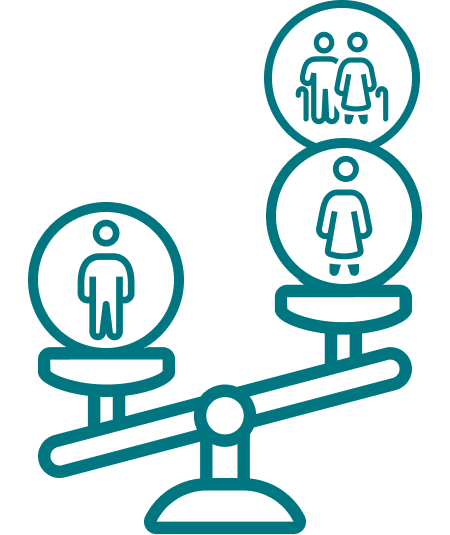
Incomes are generally lower for immigrant women compared to immigrant men. (Statistics Canada, 2017l)
-
Immigrants over the age of 65 experience the highest rates of chronic low income. (Picot & Lu, 2017)
-

The wages of immigrant children are generally not comparable to that of Canadian-born children (Statistics Canada, 2017l) The children of immigrants, among nearly all racialized groups, have lower earnings compared to children with Canadian-born parents, despite the fact that immigrant parents are more likely to have degrees. This gap is especially large for racialized categories of Black, Latin America, West Asian/Arab and South-East Asian children of immigrants. (Kiziltan, 2016)
Review questions
True or false?
Immigrants may face financial hardship due to challenges in earning wages appropriate to their education and skills.
True
Over the last 15 years, greater numbers of immigrants have choosen to settle in the prairie provinces.
True
Private sponsors, through the Private Sponsorship of Refugees Program, are expected to provide refugees with financial support for up to three years.
False
Government sponsored refuges (GARs) are eligible to receive funding from the Government of Canada for up to six months, or, at times until they are able to support themselves.
False
Among resettled refugees, privately sponsored refugees tend to become self-supporting more quickly than government assisted refugees.
True