Needs of adolescents and youth

Within Canada, the age at which a child is considered to be an adult varies. Age 18 or 19 is commonly referred to as the “age of majority” according to different provinces and territories, but government services may have different cut-off ages (Government of Canada, 2017).
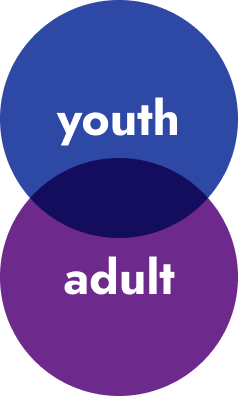
Adolescents and youth go through important stages of development that often present additional needs or challenges. Adolescence begins with the normal, physiological onset of puberty and ends once adult behaviour and identity are accepted. Adolescence generally ranges from age 10 to 19 years of age (Canadian Paediatric Society, 2003) (World Health Organization, n.d.). These years are known to be a crucial period of development where exposure to trauma can greatly influence mental health (World Health Organization, 2021) (World Health Organization, n.d.). As a result, we encourage health service providers to show flexibility in defining the adolescent stage to include the special situations where young people require support (Farley, 2020; Canadian Paediatric Society, 2003).
Youth (or transitional aged youth) warrant discussion as a subgroup as they occupy a unique “in-between” stage where they are about to enter adulthood but may not have the emotional maturity and experience of adults. What constitutes “youth” can be difficult as this stage of transitioning from childhood to adulthood can be fluid and varied. For example, the United Nations often refers to “youth” as the stage at which a person leaves compulsory education for first employment, usually between the ages of 15 and 24 (United Nations, n.d.). Canadian federal programs use varied age categorizations for youth, beginning as young as age 15 to 19, and ending at age 23 to 35 (United Way of Calgary and Area, 2010). When providing services to youth, it is important to ensure coordination and integration of services during this transition period as regional and agency definitions differ.
The transition years from children-centred to adult-centred services is recognized as an issue in the provision of mental health services for youth. It is often a stressful period for youth and their family (Toronto Central Local Health Integration Network, 2015).
It is important to start planning the transition to the adult mental health system before the youth turns 18 years of age. This transition may include receiving care at a new facility or department, interacting with new staff, having a new treatment plan and being eligible for adult healthcare programs. Youth usually receive more responsibilities and independence when transitioning to the adult mental health system. It is therefore important to have support from family and caregivers to prepare (Canadian Mental Health Association, 2023).
Many youth also experience particular struggles related to language barriers, cultural conflict with parents or barriers to the Canadian educational system or entering the labour market. All of these struggles and barriers can be sources of stress.
As transitioning mental health systems has been flagged as an area of high need, different organizations have launched programs to help youth navigate the mental health system. For example, Youth Wellness Hubs provide youth aged 12-25 with one-stop access to mental health services, including assessments, treatment for addictions and substance use, therapy and counselling, peer and family support and referrals to psychiatrists, as well as education, employment and housing services (Henderson et. al., 2022).